Political and Cultural History
Arturo Morales Carrion
Grammy Nominated
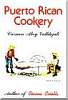
A Taste of Puerto Rico
Cook Book by Yvonne Ortiz
Puerto Rico : A Political and Cultural History
by Arturo Morales Carrion
Grammy Nominated
Always refer, in pitying,
sympathetic tones,
to "Liberal psychopathology." ►
BUY EYE-OPENER BOOK HERE◄
DOUBLE TONGUE DEPT. Spanish: To Speak
or Not To Speak
By Don Jibaro s a Hispanic
or Latino parent... ¿Am I frustrated,
checkmated, forlorn, discontented, discouraged, embittered,
flummoxed, irked, resentful, stonewalled, stymied,
thwarted and ungratified because my children won't learn
Spanish?
No! Let me explain...
I once
I had a visitor who brought along his daughter so he could
play with my daughter while he visited. I noticed that he
gave instructions to the child in Spanish, to which the
daughter responded in Spanish... She went on to play with my
daughter, asking questions about toys. She asked them in perfect
English.
My friend asked me if my daughter spoke Spanish and I said no. He
then retorted: "Why not?"
I went on to explain that the primary language we used
in our home was English, and that Spanish was secondary.
I had to explain that because in our society English is
the primary language... all business, education and social
events are conducted in English. Consequently, I
insisted that my kids spoke primarily the language of the land.
You see... my friend and his family are from Mexico and Spanish is the primary language in their
home. Since they have very little command of the English
Language,
it's evidently obvious that in order to expedite
understanding, communication is in the language they all
dominate: Spanish.
In my home, the primary language is English. My primary
language is Spanish. So if I spoke to them in Spanish she
would have to engage in mental translation of terms before
execution, kinda like I do with English when I'm in a
grammatical jam. That's not easy, believe me. I've done it and
it is work... it takes effort and skill.
So when will my kids speak Spanish,
the language of my ancestors? They will do so when it's required
that they do so... at very limited times in Los Angeles, CA, my
part of United States where I live. You see, 87% of community
activity in L.A. is conducted in English.
About half of all children of Hispanic immigrants speak
at least some Spanish, but must be enrolled in school
where Spanish is secondary. That's how my friend's kid
spoke both Spanish and
English
fluently. Spanish is compulsory in the home at the same
time that English is compulsory at School... for at
least 6 hours every day!
Yet still, many Hispanic
parents say they struggle to preserve the language at
home, even in a region where Spanish beams from airwaves
and beckons from storefront signs. English is the
language of the land. No doubt.
While California boasts a large concentration of Spanish
speakers — roughly 20 percent of the population over age
5 speak Spanish or a variation at home — experts say a
strong command of the language wanes with the second and
third generations.
English-only advocates say that's a welcome result of
assimilation. Don Jibaro says you can
circumvent that by making Spanish exotic in your home, a
language of romance and mysticism that will awaken their
imagination and interest.
Case in point: my 31 yr old daughter
got a whim to go to Spain and learn a better Spanish than the
one she already knew. In the twinkling of an eye and before you
could say "disestablishmentarianism", she went to Madrid via
London and Rome. She got herself one month of lessons and came
back before you could say "This mouth is mine." She loved it!
Parents trying to raise bilingual children worry that a
strong sense of cultural identity and job prospects are
at stake for Hispanic youth who speak little or no
Spanish. Not to a Puerto Rican! Are we not Boricuas?
...even if we were born on the moon?
Families of Mexican immigrants bemoan
the fact that their children can barely roll their r's...
like in "charrasqueado". They feel that to emphasize
Spanish will be detrimental... that they will be closing
doors as far as careers go. Not so. You can do both,
like my friend's daughter. Just prioritize the language
of the land.
Others use rewards to encourage young children
to respond to them in Spanish. The children win points
every time they speak Spanish, and accumulated points
can lead to a prize at the end of the week... ¡Unreal!
Data from a 2002 study conducted by the Pew Hispanic
Center and the Kaiser Family Foundation show that 47
percent of second-generation Hispanics are bilingual.
That figure appears high, but community advocates say
many Hispanics who are conversational in Spanish lack
basic grammatical skills and vocabulary.
Furthermore, the number of
bilingual Hispanics drops to 20 percent in the third
generation... then, the language
morphs into Spanglish, a vernacular mix of English and
Spanish. (Read my Spanglish essay here...
http://jibaros.com/spanglish.htm)
Raul Martinez, who is Puerto Rican,
worries that a strong command of Spanish, both written
and verbal, is hard to find among Hispanic youth. He is
from Aspira of Florida, Inc., an agency that
sponsors programs and provides scholarships for them.
"There's this notion that if you come from a Spanish
background, you don't need Spanish as a foreign language
at school," said Martinez. "Many Hispanic kids aren't
learning Spanish diction, language, grammar and verb
conjugation."
BUT I say... some Hispanic parents don't care one iota whether their
kids speak Spanish or not.
But as they enter adulthood in a Spanish-rich state
(like California or Florida),
some second-generation Hispanics regret their
English-only upbringing.
There's no doubt that if you speak Spanish you'll have more
career opportunities. So, go ahead and ask your mother
or father to
start speaking to you in Spanish. There's always time.
It's an additional blessing. Studies have revealed that
children who lose touch with their parents' language
often feel rootless. They lose a vital connection to the
family, as a ship at sea without an anchor. ¿Me entiendes?
Velma Rios, a local teacher says:
"Yes,
there are better opportunities, especially in
Education and in Business, if you can speak and
write in Spanish, too. I earn 5% more each month
because I have a Certificate of Competency....I can
teach the Spanish language as well as the English
language."
All in all, en conclusión y para
terminar...Spanish is a language that, when spoken
correctly, transforms both the speaker and the listener.
It is a "Romance (or Romantic) Language"...and FYI, the
most widely spoken Romance language by native speakers
today is... Guess? Yup! Spanish... followed by
Portuguese, French, Italian and Romanian, all of which
are main and official national languages in more than
one country. So there!
"There's no greater love than
to lay down
your life for your friends" (John 15:13)
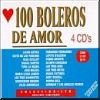
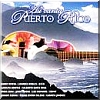
Various Artists CD
Audio CD
Book
Book
Book
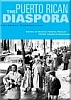
The Puerto Rican
Diaspora (book)
Migrating and building communities in the U.S.A.
From Hawai'i in 1900 to New England—the Puerto Rican diaspora grows in the
States...more than in Puerto Rico itself.
Don Jibaro: "I own this book. It makes me
churn."
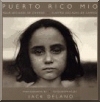
PR's
History
in Photos
The pages of this pictorial opus expresses the legacy, struggle, beauty,
misery, joy of Puerto Rico of days past. Delano saves the spirit of
Puerto Rico's past, once thought to be lost with faded memories. This is
a book to keep for oneself, it strenghtens one's soul. CLICK HERE
GREAT BOOK
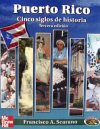
Cinco
Siglos
de Historia Book Review by Don Jíbaro About 10 yrs
ago I visited La Universidad de Puerto Rico. At their
bookstore I asked for the BEST book in Puerto Rican history
they had. "Cinco Siglos de Historia" inSpanish, by
Francisco Scarano from Fajardo now teaching at the Univ. of
Wiconsin-Madison)...I own it... I READ IT, loved it, now
my brother in law asks me "What's good in PR Hist? "HEY,
LUIS... DON'T LET THE PRICE FOOL YOU, there's none BETTER,
in real Academic SPANISH" Read for yourself
►GO
HERE











 DOUBLE TONGUE DEPT.
 s a Hispanic
or Latino parent... ¿Am I frustrated,
checkmated, forlorn, discontented, discouraged, embittered,
flummoxed, irked, resentful, stonewalled, stymied,
thwarted and ungratified because my children won't learn
Spanish?
No! Let me explain...
s a Hispanic
or Latino parent... ¿Am I frustrated,
checkmated, forlorn, discontented, discouraged, embittered,
flummoxed, irked, resentful, stonewalled, stymied,
thwarted and ungratified because my children won't learn
Spanish?
No! Let me explain... English
fluently. Spanish is compulsory in the home at the same
time that English is compulsory at School... for at
least 6 hours every day!
English
fluently. Spanish is compulsory in the home at the same
time that English is compulsory at School... for at
least 6 hours every day!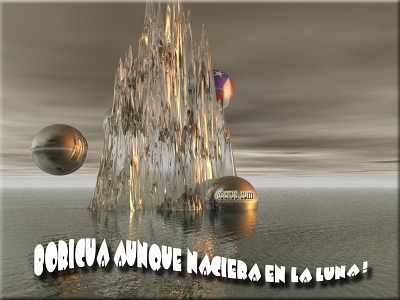



 Book
Book