|
 |
SHOW ME THE MONEY DEPT.
 Is
Puerto Rico Really a Welfare Island? Is
Puerto Rico Really a Welfare Island?
(Purloined from The
Economist
by Tony "Rotten" Alicea exclusively
for Jibaros.com)
AS THE mayor of Aguadilla, on Puerto Rico's north-west coast,
Carlos Méndez is proud of his town. He likes to take visitors
onto the balcony of the town hall and challenge them to spot a
scrap of paper in the plaza. There are none; but here, and all
around the centre of town, there are no busy people either.
The shops and offices are shabby, with little going on in
them. The buildings along the beautiful beachfront look
run-down. A few men sit in the shade, and have apparently been
planted there as long as the tree has.
Puerto Rico has been a United States territory for more than a
century, and its people have been citizens since 1917. They do
not vote in national elections or pay federal income taxes,
but those are not the biggest differences between Puerto Rican
residents and their fellow American citizens. The island is
distinguished by its poverty and joblessness, which are far
worse than in any of the 50 states. The territory's economy,
moreover, has fallen further behind the national one over the
past three decades. Bad government—not just locally, but also
federally—is largely to blame. Yet most Americans are
oblivious to the Caribbean island's problems.
The place did earn a rare and brief mention in some mainland
newspapers earlier this month. Its government had hit a
borrowing limit and partly shut down for a couple of weeks,
putting 95,000 civil servants out of work. Then leaders in San
Juan—the commonwealth's capital—agreed on a budget deal that
let the government borrow more and resume paying people. The
drama ended, and life there reverted to its depressing former
state.

Some Puerto Ricans are doing well. Most of
Aguadilla's 70,000 people, for example, live in the richer
suburbs that surround the city. The area has many of the same
fast-food and retail chains that pervade the United States,
and companies from the mainland, such as Hewlett-Packard and
Micron Technology, have built factories nearby. Much of the
island, however, is like Aguadilla's town centre, full of low
incomes and idle hands.
Puerto Rico's annual income per person was around $12,000 in
2004, less than half that of Mississippi, the poorest state.
More than 48% of the island's people live below the federally
defined poverty line. That poverty rate is nearly four times
the national average, and more than twice as high as in poor
states such as Kentucky, Louisiana, Mississippi and West
Virginia.
Half the working-age men in Puerto Rico do not work.
Officially, only 46% of those who are not pursuing a degree
have formal jobs, compared with a United States average of
76%. The territory does have a big informal economy. But María
Enchautegui at the University of Puerto Rico and Richard
Freeman at Harvard University have looked into this, and
reckon that counting unofficial workers boosts the employment
rate only to 55%, at best. Their research is included in a new
book on the island's problems, put together by two
think-tanks: the Brookings Institution in Washington, DC, and
the Centre for the New Economy in San Juan.*
Puerto Rico ought to be doing much better, because being part
of the United States gives it many advantages over other
low-income economies. Most important may be America's legal
system, which offers excellent protection, by
developing-economy standards, for private property, contracts,
patents, free speech and so forth. These guarantees tend to
attract outside capital, spur local investment and let
commerce and innovation flourish. The island can also trade
freely with the giant mainland economy. And its workers can
migrate to and from the 50 states at will, gaining skills,
creating business connections and making money.
In some ways, generous United States taxpayers have also been
useful. To help the territory catch up, they have paid for
infrastructure and a huge leap in education levels. The
average length of schooling in Puerto Rico rose from 3.7 years
in 1950 to 11 years in 2000.
Crutch disease
With these advantages, Puerto Rico grew impressively in the
decades after the second world war, even outperforming Asian
“tigers” such as South Korea, Taiwan and Singapore (which has
roughly Puerto Rico's population). Since the 1970s, however,
Puerto Rico has been outpaced badly by the Asian tigers and
Ireland, another place to which it is often compared. It has
also diverged from the United States, losing ground even to
lowly Mississippi.
Many things have gone wrong. Most important, however, is that
the United States government assumed too big a role in the
Puerto Rican economy, and its largesse enabled the
commonwealth's government to do the same. Through hubris,
clumsiness and sheer size, these governments knocked Puerto
Rico off the promising path that it was following, and the
island's economy is now lost in a thicket of bad incentives.
Two federal intrusions stand out: an oversized welfare state,
and misguided rules on business investment.
Federal transfer payments to Puerto Rico rose sharply in the
1970s. Some programmes have been modified since then, but
transfers still make up more than 20% of the island's personal
income. These federal handouts reflect the sensibilities of a
wealthy country. So by Puerto Rican economic standards, they
are huge. And the more a man or woman earns through paid work,
the more they decrease.
Puerto Ricans are eligible for federal disability payments,
for example, through Social Security. Ms Enchautegui and Mr
Freeman point out that, in the territory, federal disability
allowances are much higher than the United States average as a
share of wages and pension income. Unsurprisingly, therefore,
one in six working-age men in Puerto Rico are claiming
disability benefits.
Many families do not view the federal handouts as temporary.
Neither does Raúl Vega, who owns a consumer-finance outfit in
Aguadilla. His firm treats the benefits as income when
deciding whether to lend people money for new televisions.
Some Puerto Rican households, of course, would barely struggle
along without federal assistance. For many people, however,
the money that can be earned through federal transfers and a
little informal work is more than the market wage—and requires
much less effort. Meanwhile, in a strange echo of America's
immigration debate, people from the Dominican Republic do many
of the jobs in Puerto Rico that pay too little to attract the
locals.
Relaxation without representation
What do Puerto Rico's men do all day? Some get into trouble.
But many others hang out in pleasant places that require
little money, such as beaches, shopping malls and the
armchairs in Borders bookstores. They also watch plenty of
television. Downtown Aguadilla may be shabby, but satellite
dishes sprout from many rooftops. People always have money for
that bill, says Mayor Méndez.
Through tax laws, the federal government has also favoured
some business investments in Puerto Rico over others. Most
notorious is “Section 936”, a rule that skewed investment
towards technologies that were too advanced for Puerto Rico's
stage of development. Drug firms and chemical producers built
factories that used lots of capital and few workers, because
doing so lowered their global tax bills. In a recent book on
the territory's economy, James Dietz described this distorted
evolution well.†
High technology sounds wonderful. But what Puerto Rico has
needed over the past few decades is more medium-tech plants.
These would employ more people, teach them skills better
suited to the island's level of development, and tighten links
to local suppliers and business services. More service jobs
for the unskilled would be good, too. Steven Davis at the
University of Chicago's business school, another contributor
to the Brookings/CNE studies, points out that jobs in tourism
and recreation engage a lower share of the workforce in Puerto
Rico—despite its beautiful beaches—than in any of the 50
states.
In short, by lowering demand for less educated workers,
lopsided investment has exacerbated the welfare-driven
distortions in the island's labour supply. The result is lots
of idle poor. The Section 936 rules were phased out between
the mid-1990s and 2005, but the damage will persist. Many
Puerto Ricans have acquired few useful habits and skills over
the past three decades; and the welfare state, though smaller
than before, is still pervasive enough to lock many of the
labour distortions in place.
Puerto Rico's bloated government also bears much of the blame.
Around 30% of the territory's jobs are in the public sector.
Among other things, a big and coddled bureaucracy undermines
Puerto Rico's educational achievements in two ways. First,
nearly half those on the education department's payroll are
not teachers; quality has fallen because of low accountability
and mismanagement. Second, because of the small private
sector, too few well-educated Puerto Ricans are gaining useful
skills and experience in the marketplace.
As he walked through Aguadilla's town hall recently, Mr Méndez
boasted about each employee's university or graduate-school
credentials as he introduced them. The trouble, he says, is
that “All they want to do is find security only. They have no
ambition...Everybody wants to work for the government.” Manuel
Reyes, of the Puerto Rico Manufacturers Association, also sees
little hope that the government's role will shrink. “There is
no light at the end of the tunnel,” he says, “because we are
still in denial.” And the rest of America is still
indifferent.
FOR FURTHER READING:
 “The
Economy of Puerto Rico: Restoring Growth”
“The
Economy of Puerto Rico: Restoring Growth”
edited by Susan Collins, Barry Bosworth and Miguel Soto-Class.
Centre for the New Economy, San Juan, Puerto Rico, and
Brookings Institution Press, Washington, DC.
“Puerto
Rico: Negotiating Development and Change”
by James Dietz; Lynn Rienner Publishers, Boulder, Colorado

< >(Sponsor) LP
Puerto Rican Flag Amazing Congas
--
Quinto 11", Conga 11.7", Tumba 12.5" - Siam oak shell,
5/16" tuning rods, unique side plates, and Matador Soft Strike
Rims for ease of playing. LP ProCare shell protectors
HERE
~~~~~~~~~~~~~~~~~~~~~~~~~~~~~~~~~~~~~~
"The wicked run when no one is chasing them,
but the honest are as brave as lions." —Prov. 28:1
~~~~~~~~~~~~~~~~~~~~~~~~~~~~~~~~~~~~~~
|
 |
PR's History
in Photos
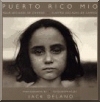
The pages of this pictorial opus expresses the legacy, struggle, beauty, misery, joy
of Puerto Rico of days past. Delano saves the spirit of Puerto Rico's past,
once thought to be lost with faded memories. This is a book to keep for oneself, it
strenghtens one's soul.
 CLICK HERE CLICK HERE

ANTI-VIRUS
|

Concord Picante 25th
Anniversary Collection
Less than $25. In 4 CD Boxed set, Mongo, Tito, Eddie and
many others...
Thick booklet included. This Concord is a must
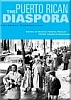
The Puerto Rican Diaspora (book)
Migrating and building communities in the U.S.A.
From Hawai'i in 1900 to New England—the Puerto Rican diaspora
grows in the States...more than in Puerto Rico itself.

Don Jibaro: "I own this book. It makes me churn

Grammy Nominated

1900s PR Music...




Tito,
Eddie Finally
I can do all things through Christ
who strengthens me."
—Phillipians 4:13
DVD - "Sights & Sounds of Puerto Rico"
A Taste of
Puerto Rico
by Yvonne Ortiz

arth and Spirit: Medicinal Plants and Healing Lore from
Puerto Rico
by Benedetti & Janto
|
|